Finding a portable power station under $1500 that handles a fridge, CPAP, and phone charging simultaneously is a solved problem — you just need to know which five units actually deliver. The best options here range from 1070Wh to 2048Wh, charge to 80% in under an hour, and all carry LiFePO4 batteries rated for 3,000+ cycles.
| Photo |
Top Pick

|
Versatile

|
Budget

|
Best Value
|
Best for Reliability

|
|---|---|---|---|---|---|
| Product | Jackery Explorer 1000 v2 Portable Power Station | EF EcoFlow DELTA 2 Portable Power Station | Anker SOLIX C1000 Portable Power Station | Goal Zero Yeti 1500 Portable Power Station (6th Gen) | BLUETTI AC200L Portable Power Station |
| Capacity | 1070Wh | 1024Wh | 1056Wh | 1505Wh | 2048Wh |
| Ac output | 1500W (3000W surge) | 1800W (2700W surge via X-Boost) | 1800W (2400W surge via SurgePad) | 2000W (3600W surge) | 2400W (3600W power lifting) |
| Battery type | LiFePO4 (4000 cycles) | LiFePO4 (3000 cycles) | LiFePO4 (3000 cycles) | LiFePO4 (4000 cycles, IPX4 rated) | LiFePO4 (3500 cycles, expandable to 8192Wh) |
| Recharge time | 1 hour (AC) | 1.7 hours (AC, 80 min to 80%) | 58 minutes (AC, 43 min to 80%) | 1.1 hours (AC, 0-80% under 1 hour) | 1.7-2.2 hours (solar), 45 min to 80% (AC) |
| Buy Now | Check Price → | Check Price → | Check Price → | Check Price → | Check Price → |
Quick Tips
Calculate your real daily watt-hour draw before buying — fridge alone can pull 50Wh overnight, so a 1000Wh unit gives you roughly one overnight plus device charging
LiFePO4 batteries outlast NMC by 3-5x on cycle count — always confirm chemistry before committing at this price point
Solar input wattage caps vary widely; if you plan to recharge off panels, check the max solar input before pairing a panel
Most units in this range support pass-through charging — you can charge the station and run devices from it simultaneously without degrading the battery
Jackery Explorer 1000 v2 Portable Power Station
Best for overlanders who want fast recharge and proven reliability
Jackery Explorer 1000 v2 Portable Power Station
Best for overlanders who want fast recharge and proven reliability
What we like
- Full charge in one hour via AC makes it practical between camp days without waiting around
- LiFePO4 battery rated for 4,000 cycles gives it a realistic 10-year lifespan at regular use
- App control lets you switch between quiet overnight charging mode and fast charging without touching the unit
- Compact and relatively light at around 25 lbs for a 1000Wh class unit
What we don't
- 1500W continuous output is lower than EcoFlow and Anker competitors at this capacity, limiting high-draw appliances
- No expandability — capacity is fixed at 1070Wh with no external battery option
- Emergency 1-hour charging requires enabling it in the app each session, which is easy to forget
The Explorer 1000 v2 solves the single biggest frustration with portable power stations: sitting around waiting for it to charge. One hour from zero to full via AC means you can top it off while cooking breakfast and leave with a full tank — that turnaround changes how you actually use a power station on a multi-day trip.
This is the right pick if you run a 12V compressor fridge, a few devices, and occasional laptop charging over two to three nights. If you need to power high-draw appliances like an electric skillet or a full-size blender, the 1500W output cap will frustrate you — step up to the EcoFlow or Bluetti.
EF EcoFlow DELTA 2 Portable Power Station
Best for base camp setups that need to run multiple devices simultaneously
EF EcoFlow DELTA 2 Portable Power Station
Best for base camp setups that need to run multiple devices simultaneously
What we like
- X-Boost technology enables running devices up to 2200W even though the inverter is rated at 1800W, covering most high-draw appliances
- Expandable to 2048Wh or 3040Wh with EcoFlow extra batteries, so your investment scales as your needs grow
- Up to 15 devices can charge simultaneously across its port selection without throttling individual outputs
- 500W max solar input is one of the higher limits in the 1000Wh class, reducing recharge time with a capable panel
What we don't
- Heavier than Jackery and Anker at similar capacity, making it less practical for setups where you carry it frequently
- X-Boost does not work with all high-draw appliances — inductive loads like certain motors may still trip the inverter
- Expansion batteries add significant cost and make this a larger system investment than it initially appears
Where the Jackery wins on simplicity, the DELTA 2 wins on flexibility — the X-Boost inverter is a genuine differentiator that lets you run your coffee maker, electric skillet, or hair dryer without upgrading to a 2000Wh unit. Coupled with expandable capacity, this is the one you buy when you know your power setup is going to evolve.
Pick this if you are base camping with multiple people, running a mix of AC and USB loads, or planning to add capacity later. If you know exactly what you need today and want the simplest setup, the Jackery is less expensive and equally fast to charge.
Anker SOLIX C1000 Portable Power Station
Best for van life and emergency home backup where fast recharge is critical
Anker SOLIX C1000 Portable Power Station
Best for van life and emergency home backup where fast recharge is critical
What we like
- 43-minute charge to 80% is the fastest in this class and genuinely changes the practicality of daily recharging off a wall outlet
- SurgePad technology pushes surge output to 2400W, covering 99% of common appliances without needing power-lifting software tricks
- 15% smaller than comparable 1kWh units — the compact footprint matters when van space is measured in inches
- App-controlled charging modes let you set quiet overnight charging at 30dB, matching Jackery's noise-conscious feature
What we don't
- Expansion battery exists but the SOLIX ecosystem is newer and fewer compatible accessories are available versus EcoFlow's mature lineup
- UltraFast charging requires the Anker app to activate and only works at specific temperature ranges, limiting it in cold-weather setups
- Slightly fewer output ports than the EcoFlow DELTA 2 at this price point
The SOLIX C1000 is built for people who need to recharge fast and move on — 43 minutes to 80% on AC is measurably faster than anything else in this price range, and the compact form factor makes it the right unit when space is the constraint. If your van life setup involves daily wall charging at campsites or home, that turnaround time adds up over a season.
Choose this if you prioritize recharge speed and physical size over maximum port count or capacity expandability. If you need to grow the system later with expansion batteries, EcoFlow's ecosystem is more developed right now.
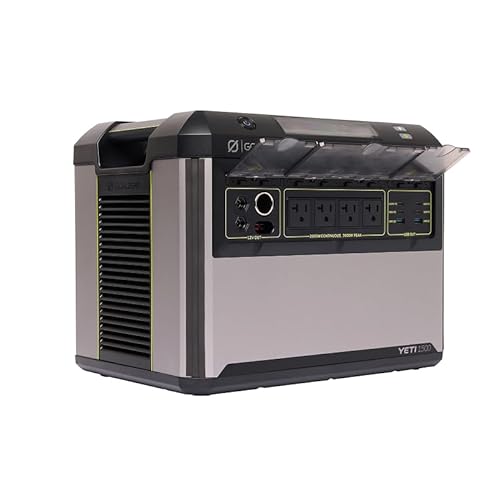
Goal Zero Yeti 1500 Portable Power Station (6th Gen)
Best for rugged outdoor use where weather resistance is non-negotiable
Goal Zero Yeti 1500 Portable Power Station (6th Gen)
Best for rugged outdoor use where weather resistance is non-negotiable
What we like
- IPX4 weather-resistant rating with port shields is the only unit in this roundup built to survive rain and mud without a cover
- 2000W inverter with 3600W surge output handles power tools, CPAP machines, and full-size fridges with genuine headroom
- Aluminum casing and rubber bumpers survive vehicle vibration and rough handling that would damage plastic-chassis competitors
- 140W USB-C port is the highest-wattage single USB-C output in this comparison, fast-charging laptops without an adapter
What we don't
- Heavier than 1000Wh competitors at this price — the rugged build adds weight you will notice if you move it frequently
- Goal Zero's ecosystem is more expensive than EcoFlow or Jackery for accessory panels and add-ons
- No external battery expandability — capacity is fixed at 1505Wh
The 6th Gen Yeti 1500 is the only unit here rated to get rained on — IPX4 weather resistance and port shields are not marketing language, they are the difference between a unit that lives in the bed of a truck and one that needs a dry box. At 1505Wh with a 2000W inverter, it also sits in the sweet spot between portable and genuinely powerful.
This is the right pick if your setup involves rough terrain, unpredictable weather, or you physically move the unit in and out of a vehicle repeatedly. If you mostly run it stationary and covered, the EcoFlow or Jackery deliver similar performance at lower cost.
BLUETTI AC200L Portable Power Station
Best for extended off-grid stays and whole-camp power needs
BLUETTI AC200L Portable Power Station
Best for extended off-grid stays and whole-camp power needs
What we like
- 2048Wh base capacity is the largest in this roundup and delivers roughly double the runtime of 1000Wh competitors on the same load
- Expandable to 8192Wh with external B300K batteries, making it a realistic whole-trip power solution rather than a daily recharge dependency
- 30A RV output port is unique in this group and connects directly to RV shore power ports without adapters
- Power-lifting technology extends the inverter to 3600W surge, running appliances up to 3600W that a standard 2400W inverter would reject
What we don't
- At roughly 60 lbs, this is a two-person lift — not practical for setups where you move the unit frequently
- Larger form factor means it dominates van or truck interior space compared to 1000Wh competitors
- Price creeps up quickly once you add expansion batteries, pushing the effective system cost well past $1500
If the other four units feel like they need topping off too often, the AC200L is the answer — 2048Wh of base capacity means you are running a fridge, lights, and device charging for three or four days before you need to think about recharging. The expandable architecture means this unit grows with your setup instead of getting replaced.
Pick this if you run extended trips of four or more nights, power multiple people's devices, or want a unit that doubles as genuine emergency home backup. If you move camp every day and need to recharge quickly, something lighter and faster will serve you better.
What to Look For
Capacity is the first number that matters, but output wattage determines what you can actually run. A 2000Wh unit with only 1000W output cannot start a standard portable fridge compressor.
Recharge speed matters most when you are driving camp-to-camp or relying on limited solar hours. Look for units with at least 400W solar input and 1000W+ AC charging to stay flexible.
Expandability separates one-trip purchases from long-term investments. If your power needs might grow — adding a second fridge, a CPAP, or a space heater on shoulder-season trips — choose a unit with external battery compatibility now.
Who Should Skip This
If your power needs are limited to phone charging and a single LED lantern, a $200 unit handles that fine and nothing in this roundup makes financial sense for you. If you need to run a 240V appliance or a central air conditioner, you are outside the portable power station category entirely — look at whole-home battery systems instead.
What the Community Actually Uses
On r/overlanding, the recurring power station thread gets heated fast — mostly because half the recommendations ignore actual watt-hour math and just repeat brand names. The consensus from members who have run full overland setups is clear: fridge runtime is the real benchmark, 12V compressor draw is the honest stress test, and expandability matters more at year two than it does at purchase.
Quick Picks — In Case You've Already Decided
Frequently Asked Questions
What is the difference between watt-hours and watts on a power station?
Watt-hours (Wh) is capacity — how much total energy is stored. Watts (W) is output — how fast it can deliver that energy at once. A 1000Wh station with 500W output will run a 500W device for about two hours, accounting for efficiency losses.
Can I run a full-size refrigerator from a portable power station?
A standard kitchen fridge draws 100-400W running and can surge to 800W on compressor start. Most units in this roundup handle that surge, but runtime is limited — expect 4-8 hours depending on fridge efficiency. A 12V compressor fridge pulls far less and is the smarter pairing.
Is LiFePO4 actually worth it over regular lithium-ion?
Yes, at this price point. LiFePO4 delivers 3,000-4,000 cycles versus 500-1,000 for NMC lithium-ion. It is also more thermally stable, which matters in vehicle-mounted or outdoor setups where temperatures swing significantly.
How long does it take to recharge from solar panels?
Recharge time from solar depends on panel wattage, sun hours, and the unit's max solar input. A 1000Wh station with 400W solar input in 5 peak sun hours theoretically recharges in about 3 hours. Real-world conditions — clouds, panel angle, cable losses — typically add 30-50% to that estimate.
Can I leave a portable power station plugged in all the time for home backup?
Most units in this roundup support pass-through or UPS modes designed for continuous wall connection. Check for a dedicated 'standby' or 'UPS' mode — units without it may cycle the battery continuously, degrading it faster than advertised.
Buying Guide
You need to match watt-hours to your actual load — not your wish list. Add up the wattage of everything you plan to run, multiply by hours, and that is your floor.
Then double it for headroom. LiFePO4 chemistry beats lithium-ion on lifespan every time.
Fast recharge matters more than you think when you are camp-to-camp.