A portable power station can charge your EV off-grid — but only if it has the wattage and the right port, and most don't. The five options here all deliver 2000W or more through a dedicated EV outlet, with capacities from 2048Wh up to 4096Wh.
| Photo |
Top Pick

|
Versatile

|
Budget

|
Best Value
|
Best for Reliability

|
|---|---|---|---|---|---|
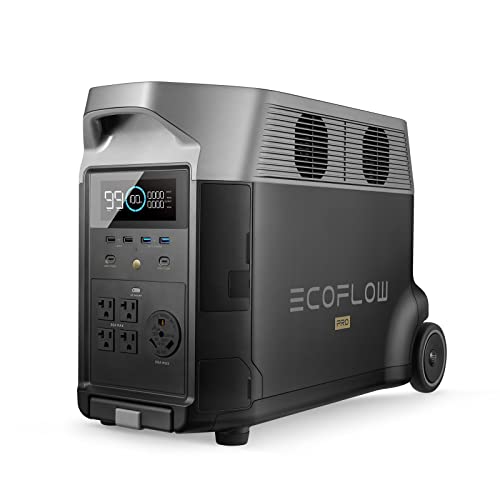
| Product | EF EcoFlow DELTA Pro 3 Portable Power Station | Anker SOLIX F3800 Portable Power Station | Jackery Explorer 3000 Pro Portable Power Station | EF ECOFLOW Portable Power Station DELTA Pro 3600Wh | BLUETTI AC200MAX Portable Power Station |
| Ev port | ✓ | ✓ | ✗ | ✓ | ✗ |
| Capacity | 4096Wh | 3840Wh | 3024Wh | 3600Wh | 2048Wh |
| Ac output | 4000W (6000W X-Boost) | 6000W | 3000W | 3600W | 2200W |
| Battery type | LFP | LFP | NMC | LFP | LFP |
| Buy Now | Check Price → | Check Price → | Check Price → | Check Price → | Check Price → |
Quick Tips
Confirm your EV accepts Level 1 or Level 2 AC input before buying — some EVs cap charge rate at 1.4kW on standard outlets regardless of what the power station outputs.
Use the NEMA 14-50 port when available instead of a standard 120V outlet — it can push up to 50A and charge roughly twice as fast.
Recharge the power station from solar between drives: 400W of panels can recover about 2kWh in a decent sun day, giving you a genuine off-grid loop.
LFP (lithium iron phosphate) batteries tolerate more frequent full-discharge cycles than NMC — if you plan to drain the unit regularly for EV topping, prioritize LFP chemistry.
EcoFlow DELTA Pro 3 Portable Power Station
Best for high-mileage off-grid EV recovery
EcoFlow DELTA Pro 3 Portable Power Station
Best for high-mileage off-grid EV recovery
What we like
- 4000W continuous AC output is enough to charge most EVs at full Level 2 speed without throttling.
- Supports 7 unique charging methods including EV charging piles, solar, and AC simultaneously.
- LFP chemistry rated for 3000+ cycles, meaning daily discharge use won't kill the battery in a year.
- Expandable to 48kWh with extra batteries — the only portable unit here that can scale to meaningful whole-trip range extension.
What we don't
- Heaviest unit on this list at around 88 lbs — you need a truck bed or cargo area, not a backpack.
- Premium pricing puts it out of reach for casual weekend campers who only need occasional EV top-ups.
- 4096Wh base capacity still only adds 12-16 miles per full discharge cycle without expansion batteries.
When you need the most wattage and the most charging options in a single portable unit, the DELTA Pro 3 is the answer — 4000W continuous output through a unit that can accept EV charging pile input means you can top up your power station at a public charger and your EV from the power station in an off-grid loop. This is built for Rivian, Cybertruck, and EV overlanders who are covering serious miles in remote terrain.
If you park in one place and just need home backup, you're paying for capability you won't use.
Anker SOLIX F3800 Portable Power Station
Best for direct EV charging without adapters
Anker SOLIX F3800 Portable Power Station
Best for direct EV charging without adapters
What we like
- NEMA 14-50 port charges EVs at up to 6000W with no grounding adapters or workarounds required.
- 120V/240V dual-voltage output means it powers your EV charger, dryer, and power tools from the same unit.
- 10-year lifespan rating with InfiniPower LFP technology — the best longevity claim in this category.
- Expandable with BP3800 battery packs, doubling capacity to 7.68kWh without buying a new unit.
What we don't
- EV charging only works when the unit is not simultaneously recharging via AC — you have to choose one at a time.
- No native J1772 port — you need your own EV charging cable with a NEMA 14-50 plug.
- At around 99 lbs it is the heaviest unit here and requires two people or a hand truck to move.
The SOLIX F3800 is the cleanest EV charging experience of any unit on this list — plug your existing Level 2 cable straight into the NEMA 14-50 port and you're done, no adapters, no settings menus, no compatibility questions. This is the right call for van lifers and truck campers who already own an EV charging cable and want the highest continuous wattage available in a portable form factor.
If you're hoping to charge your power station and your EV simultaneously from the same unit, look elsewhere.
Jackery Explorer 3000 Pro Portable Power Station
Best for overlanders who also need solar charging
Jackery Explorer 3000 Pro Portable Power Station
Best for overlanders who also need solar charging
What we like
- Full charge via wall outlet in 2.4 hours — the fastest AC recharge time of any 3kWh-class unit on this list.
- Solar charged in 3-4 hours with 6x200W panels, making it genuinely viable for off-grid solar-to-EV workflows.
- Aluminum alloy pull rod and wheeled design makes it the most portable 3kWh+ unit available.
- Two 100W USB-C PD ports allow simultaneous fast charging of laptops and devices while the EV tops up.
What we don't
- No native NEMA 14-50 or J1772 port — EV charging requires going through the standard AC outlets at up to 3000W.
- NMC chemistry is less durable under frequent deep-discharge cycles compared to LFP alternatives.
- 3024Wh base capacity with no expansion option caps your range recovery at around 8-10 miles per session.
The Explorer 3000 Pro covers EV charging through its 3000W AC outlet — not a dedicated EV port, but enough continuous wattage to satisfy most onboard chargers and recover around 8-10 miles per full discharge. This is the unit for overlanders who spend more time thinking about solar recovery than EV miles — the 2.4-hour wall charge and industry-leading solar input rate mean you spend less time waiting and more time moving.
If you need a NEMA 14-50 port or LFP chemistry, step up to the EcoFlow or Anker options.
EcoFlow DELTA Pro Portable Power Station
Best for bidirectional EV station charging
EcoFlow DELTA Pro Portable Power Station
Best for bidirectional EV station charging
What we like
- X-Stream technology lets you charge the DELTA Pro itself from an EV charging station — the only mainstream unit that works in both directions.
- 3600W AC output with X-Boost expansion to 4500W covers most EV onboard charger requirements.
- Five recharge methods including EV pile, solar, AC, generator, and car outlet give unmatched off-grid flexibility.
- Expandable to 25kWh with extra batteries, making it the best long-term investment for growing power needs.
What we don't
- The EV X-Stream charging adapter is sold separately, adding cost if you want the bidirectional feature.
- At 99 lbs it is not easy to move solo — plan on a two-person lift or a hand truck for regular repositioning.
- 3600Wh base capacity adds roughly 10-12 miles per discharge cycle, which may not satisfy EV drivers expecting more.
The original DELTA Pro remains the most versatile EV charging platform in this price range — you can charge your EV from it and charge it from an EV station, which creates a real off-grid energy loop that no other unit here matches at this price point. This is the pick for serious overlanders who want to bounce between solar input, EV station top-ups, and generator backup without changing hardware.
If you don't need the bidirectional EV input feature, the DELTA Pro 3 gives you more capacity for not much more money.
BLUETTI AC200MAX Portable Power Station
Best budget entry for light EV top-up use
BLUETTI AC200MAX Portable Power Station
Best budget entry for light EV top-up use
What we like
- 2048Wh LFP base capacity is expandable to 8192Wh with B230 or B300 external batteries — the most scalable budget option here.
- LFP chemistry with 3500+ cycle rating means it holds up under frequent discharge use far better than same-price NMC alternatives.
- 2200W continuous AC output satisfies Level 1 EV charging and some lower-draw Level 2 setups.
- Lowest entry price of any unit on this list by a significant margin, making it accessible for part-time EV top-up use.
What we don't
- 2200W AC output may not satisfy the onboard charger requirements of larger EVs like the Rivian R1T or Ford F-150 Lightning.
- No NEMA 14-50 or dedicated EV port — EV charging goes through standard 120V outlets with a lower effective charge rate.
- At 62 lbs the base unit is manageable, but adding expansion batteries quickly pushes total system weight past 100 lbs.
The AC200MAX is the entry point for EV owners who want occasional off-grid top-up capability without spending $2000 — it pushes 2200W through its AC outlets and the LFP chemistry holds up under repeated use in a way that cheaper NMC units don't. This is for the EV driver who wants 5-8 miles of emergency range recovery when camped somewhere remote, not the overlander planning to live off it every day.
If your EV requires more than 2200W to charge or you want a NEMA 14-50 port, you need to step up to the EcoFlow DELTA Pro.
What to Look For
Output wattage is the gating factor — your power station needs to deliver enough continuous watts to satisfy your EV's onboard charger. Most EVs require at least 1440W for a meaningful charge rate; 3600W or higher lets you charge at full Level 2 speed.
Port type matters as much as wattage. A NEMA 14-50 outlet or a native J1772 adapter delivers power the way your EV expects it, without voltage conversion losses or compatibility guesswork.
Capacity determines how many miles you actually recover. Plan on roughly 3-4 miles per 1kWh after conversion losses — a 3.6kWh unit adds around 10-14 miles, which is enough for a campsite top-up but not a full recharge.
Who Should Skip This
If your only goal is emergency EV backup in a stationary home setting, a whole-home battery like the EcoFlow PowerOcean or a Tesla Powerwall is a more cost-effective path than any portable unit here. These power stations shine for overlanders, van lifers, and truck campers who move frequently and need flexible, portable energy — not for drivers who park in one place and want maximum kWh per dollar.
What the Community Actually Uses
On r/overlanding, EV charging from a portable power station comes up most in the context of Rivian R1T and Cybertruck owners who want true off-grid range extension without a generator. The consensus there leans toward the EcoFlow DELTA Pro for its native X-Stream EV input port and 5-ways-to-recharge flexibility — though a few threads have flagged that the Anker SOLIX F3800 is closing the gap fast on port versatility.
Quick Picks — In Case You've Already Decided
Frequently Asked Questions
Can a portable power station actually charge an electric vehicle?
Yes, but with limits. You need a unit with at least 1440W of continuous AC output and the right outlet — typically NEMA 14-50 or a J1772 adapter. Expect to add 5-15 miles per charge session depending on your EV and the station's capacity.
How many miles will I get from a 3600Wh power station?
Roughly 10-14 miles after accounting for conversion losses, which run around 15-20%. That is enough for a campsite top-up or emergency range recovery, not a full recharge from empty.
What outlet type do I need on the power station?
NEMA 14-50 is the most versatile option — it supports up to 50A and works with most Level 2 EV charging cables. Some units offer J1772 directly via an adapter, which is cleaner but less universal.
Is LFP or NMC chemistry better for EV charging use?
LFP (lithium iron phosphate) handles deep discharge cycles better and is safer under sustained high-load output — both relevant when pushing 3000W+ to an EV charger. NMC units are lighter but degrade faster with frequent full-drain cycles.
Can I recharge the power station from my EV or an EV charging station?
Some units — notably the EcoFlow DELTA Pro — can be recharged via an EV charging station using an X-Stream adapter, which is a significant advantage for off-grid loops. Most other power stations cannot do this and require AC or solar input.
Buying Guide
You need at least 2000W output and a NEMA 14-50 or J1772 port — standard AC outlets won't push enough current to charge most EVs meaningfully. Match capacity to your range anxiety: 2kWh adds roughly 6-8 miles, 4kWh doubles that.
LFP chemistry holds up better under repeated deep cycles than NMC.