The difference between a canister stove and a multi-fuel stove becomes very clear the moment isobutane canisters disappear from store shelves. Five stoves cover every fuel scenario you might face, from $35 wood-burning rigs that run on forest debris to 40,000 BTU two-burner propane stations that cook for a group in under 10 minutes.
| Photo |
Top Pick

|
Versatile

|
Budget

|
Best Value
|
Best for Reliability

|
|---|---|---|---|---|---|
| Product | MSR WhisperLite International Multi-Fuel Stove | MSR PocketRocket 2 Ultralight Camping and Backpacking Stove | Solo Stove Lite Portable Wood Burning Backpacking Stove | SOTO WindMaster Backpacking Stove with 4Flex | Camp Chef Everest 2X Two-Burner Stove |
| Fuel | White gas, kerosene, unleaded | Isobutane-propane canister | Wood, twigs, pinecones | Isobutane-propane canister | Propane (1-lb or bulk adapter) |
| Weight | 11.2 oz | 2.6 oz | 9 oz | 2.3 oz | 12 lbs |
| Seasons | 4-season | 3-season | 4-season | 4-season | 3-season |
| Boil time | 3.5 min (white gas) | 3.5 min per liter | 8-10 min (32 fl oz) | 2.8 min per liter | Under 4 min per burner |
| Buy Now | Check Price → | Check Price → | Check Price → | Check Price → | Check Price → |
Quick Tips
Store at least two fuel types across your prep stove kit — if one fuel becomes unavailable, you have a fallback that uses a completely different source.
Test your stove in wind before you need it: most canister stoves lose 30-50% efficiency in even moderate breeze, which changes your fuel burn calculation entirely.
White gas (Coleman fuel) stores for 5-7 years sealed and is far more shelf-stable than isobutane canisters, making it the better long-term liquid fuel stockpile choice.
If you rotate your canister fuel stock annually, always mark purchase dates — isobutane canisters degrade in storage and can fail to pressurize properly after 3-4 years.
MSR WhisperLite International Multi-Fuel Stove
Best for fuel-flexible grid-down cooking
MSR WhisperLite International Multi-Fuel Stove
Best for fuel-flexible grid-down cooking
What we like
- Burns three fuel types including pump-station unleaded gasoline, making it functional in almost any supply scenario.
- Self-cleaning Shaker Jet technology lets you clear the jet in the field without any tools.
- Windscreen is included and wraps the burner head, dramatically improving cold and wind performance versus canister stoves.
- Over 25 years of proven field use with a simple design that has almost no proprietary parts to fail.
What we don't
- Requires priming before lighting, which adds 60-90 seconds and a small amount of fuel every single use.
- Simmer control is coarser than canister stoves and takes practice to dial in for anything beyond boiling.
- Fuel bottles sold separately, which adds to the startup cost if you are building from scratch.
When canister supply chains collapse, the WhisperLite International is the stove that keeps working — you can pull up to a gas station and fill its bottle with unleaded while every outdoor store in a 50-mile radius is sold out of isobutane. This is the right choice for preppers running longer scenarios where fuel source certainty matters more than convenience.
If you are doing car camping or short trips where canisters are always available, the PocketRocket 2 is lighter and simpler.
MSR PocketRocket 2 Ultralight Backpacking Stove
Best for bug-out bag or 72-hour kit
MSR PocketRocket 2 Ultralight Backpacking Stove
Best for bug-out bag or 72-hour kit
What we like
- At 2.6 oz it adds almost nothing to a bug-out bag and takes up less space than a folded bandana.
- No priming, pumping, or pressurizing — lights immediately, which matters when conditions are bad and your hands are cold.
- Fine simmer control lets you cook actual meals, not just boil water, which matters for morale in extended prep scenarios.
- Extremely durable folding pot supports and a simple design with essentially no electronics to fail.
What we don't
- Isobutane canisters can be hard to source in emergencies or rural areas, creating a real supply chain vulnerability.
- Wind kills performance noticeably without a separate windscreen, which is not included.
- Cold temperatures below 20F reduce canister pressure and significantly extend boil times.
The PocketRocket 2 is the stove that goes in your bag when you do not know where you will end up — it weighs less than a deck of cards and lights instantly under almost any conditions you can tolerate standing in. Pair it with a 6-month rotating canister stockpile and it covers everything short of a multi-month supply disruption.
If your scenario extends beyond a few weeks without resupply, add the WhisperLite International as your liquid fuel backup.
Solo Stove Lite Wood Burning Backpacking Stove
Best for zero-fuel-dependency backup
Solo Stove Lite Wood Burning Backpacking Stove
Best for zero-fuel-dependency backup
What we like
- Burns twigs, leaves, and pinecones — no purchased fuel ever required, which makes it the only truly unlimited-fuel option on this list.
- Double-wall gasification design burns significantly cleaner and hotter than an open fire with far less smoke.
- Stainless steel construction with no moving parts, no electronics, nothing to break or replace.
- Compact enough to drop into a pack or vehicle kit without dedicated space planning.
What we don't
- Boil time of 8-10 minutes is the slowest on this list and requires constant feeding to maintain temperature.
- Wet weather significantly degrades performance — damp wood produces smoke and inconsistent heat.
- Not suitable for areas with fire restrictions, which may apply in some grid-down scenarios.
The Solo Stove Lite is the only stove on this list that is genuinely impossible to run out of fuel for, as long as you have trees within walking distance — for preppers, that is a category-defining advantage that no amount of canister stockpiling can replicate. It earns its place as a backup to any primary fuel-based stove, not as a standalone solution.
If your property has wood access and your scenario runs longer than your stockpile, this is the difference between eating hot food and not.
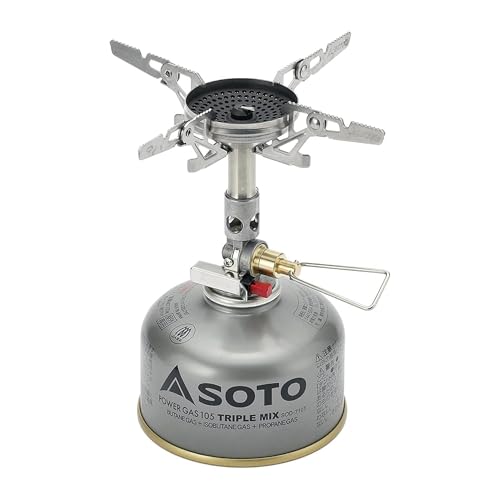
SOTO WindMaster Backpacking Stove with 4Flex
Best for exposed sites and cold-weather camps
SOTO WindMaster Backpacking Stove with 4Flex
Best for exposed sites and cold-weather camps
What we like
- Micro-regulator valve maintains consistent output as canister pressure drops in cold weather, where most canister stoves fade badly.
- Built-in windscreen engineering means you lose far less performance in exposed sites than with a conventional canister stove.
- At 2.3 oz it is marginally lighter than the PocketRocket 2 with better wind and cold performance.
- Included 4Flex pot support handles larger cookware, expanding cooking options beyond just boiling water.
What we don't
- Shares the same canister dependency vulnerability as all isobutane stoves — not the right choice if fuel sourcing is your primary concern.
- The micro-regulator adds a small amount of complexity relative to the PocketRocket's dead-simple design.
- Higher price point than the PocketRocket 2 for the same fuel type with a narrower use-case advantage.
If your prep scenario includes cold weather or consistently exposed camps where wind kills a standard canister stove, the WindMaster closes that gap without adding meaningful weight or complexity to your kit. Choose it over the PocketRocket 2 if you regularly operate below 30F or in high-wind environments where conventional canister stoves have failed you.
For temperate and low-wind conditions, the PocketRocket 2 covers the same territory at a lower price.
Camp Chef Everest 2X 2-Burner Propane Stove
Best for base camp or vehicle-based prep setups
Camp Chef Everest 2X 2-Burner Propane Stove
Best for base camp or vehicle-based prep setups
What we like
- 40,000 BTU total output across two burners means you can cook a full meal for 4-6 people simultaneously — no single-burner stove comes close.
- Three-sided integrated wind barrier keeps performance consistent in breezy base camp conditions without a separate windscreen.
- Matchless ignition requires no lighter or matches, reducing the number of failure points in your kit.
- Propane is the most widely available fuel in rural areas and bulk tanks offer a far larger stockpile density than isobutane canisters.
What we don't
- At 12 lbs it is only viable for vehicle-based setups — this is not a carry stove under any circumstances.
- Propane still requires stockpiled fuel with no field-improvised backup, unlike liquid fuel or wood stoves.
- Bulk propane tank connection requires a separate adapter hose, which is an additional item to source and store.
For a vehicle prep setup, bug-out property, or a base camp that is not moving, the Everest 2X is the stove that lets you cook like you have power — two burners running simultaneously means pasta and protein on the table in under 15 minutes for a group. This is the right call for preppers with a fixed location, a vehicle, or a homestead scenario where mobility is not the constraint.
If you might have to move fast and carry your kit, start with the PocketRocket 2 and treat this as a stationary supplement.
What to Look For
Fuel flexibility is the single most important spec for a prepping stove. A stove that only runs isobutane becomes useless the moment canister supply dries up.
Wind resistance separates functional stoves from dangerous ones when you need them most. A stove that takes 15 minutes to boil a liter in wind burns twice the fuel and creates twice the exposure risk.
Field maintenance matters more than it does for recreational camping. A stove you cannot clean and re-jet in the field with no tool access is a liability in a long grid-down scenario.
Who Should Skip This
If your prepping scenario is strictly short-term urban shelter-in-place, a simple canister stove and 10 extra canisters may be all you need — this guide skews toward longer, more austere scenarios. Propane tabletop stoves are excellent for base camp or vehicle preps but are too heavy and fuel-dependent for bug-out bags.
If weight and mobility are your first constraints, go straight to the Solo Stove Lite or the MSR PocketRocket 2.
What the Community Actually Uses
On r/preppers, the liquid fuel vs. wood burning debate comes up constantly, and the consensus has shifted noticeably toward two-stove setups: one efficient canister stove for normal use and one zero-fuel-dependency backup.
The MSR WhisperLite International gets named more than almost any other piece of gear in grid-down cooking threads, specifically because it runs on white gas, kerosene, and unleaded gasoline.
Quick Picks — In Case You've Already Decided
MSR PocketRocket 2 Ultralight Camping and Backpacking Stove
Check Price on AmazonFrequently Asked Questions
What fuel is best to stockpile for prepping?
White gas is the most shelf-stable liquid fuel at 5-7 years sealed, and it burns clean enough for enclosed spaces in a pinch. Propane in bulk tanks is excellent for base camp setups but bulky for mobility. Wood is the only truly unlimited fuel source if you have forest access.
Can I use a camping stove indoors during an emergency?
Canister and liquid fuel stoves produce carbon monoxide and should never be used in sealed indoor spaces. Wood-burning stoves like the Solo Stove produce significant smoke. Only stoves specifically rated for indoor use are safe inside — none of the stoves on this list qualify.
How many isobutane canisters should I stockpile?
A 100g canister yields roughly 45-60 minutes of medium burn time. For two people boiling water twice a day, budget about one 100g canister every 2-3 days. For a two-week supply, 10 canisters per person is a reasonable baseline.
Is a wood-burning stove reliable enough as a primary prep stove?
In areas with consistent wood access, yes — the Solo Stove Lite requires no fuel to stockpile and never runs empty. The limitation is wet weather and environments where dry fuel is scarce. Most serious preppers use it as a backup to a liquid fuel primary stove.
What is the difference between white gas and regular unleaded for the MSR WhisperLite?
White gas burns cleaner and requires less frequent jet cleaning. Unleaded auto fuel burns dirtier and clogs the jet faster, but it is available almost anywhere there is a gas station. In a true extended emergency, unleaded is the practical choice despite the maintenance burden.
Buying Guide
For prepping, your stove choice is really a fuel-access question. If you can stockpile canisters, a windproof canister stove covers most scenarios.
If supply chains go down, you need liquid fuel or wood. Pick your primary stove by your most realistic grid-down scenario, then add a backup that uses a completely different fuel source.